
Dedicated Cinema Spaces Built Around Your Home
Custom Home Theater Design & Installation in Smyrna for homeowners who want authentic cinema performance without guessing at equipment compatibility
City home theater handles complete turn-key theater design services tailored to your room dimensions, viewing angles, acoustics, and equipment preferences throughout Metro Atlanta. The mobile consultation process begins with an in-home visit to measure your space and evaluate layout opportunities before you commit to any equipment purchases. This upfront assessment prevents costly mistakes like mounting displays at incorrect heights, selecting projectors incompatible with ambient light conditions, or positioning seating where sightlines obstruct half the screen.
The design process addresses projector throw distances, screen size calculations based on viewing distance, speaker placement for balanced sound coverage, and equipment rack locations that keep components accessible but invisible. Professional recommendations account for ceiling height restrictions, existing lighting that affects contrast ratios, HVAC vents that create noise interference, and structural limitations that determine where riser platforms can safely support theater seating.
Schedule an on-site assessment to review your space before selecting projectors, displays, or seating configurations.
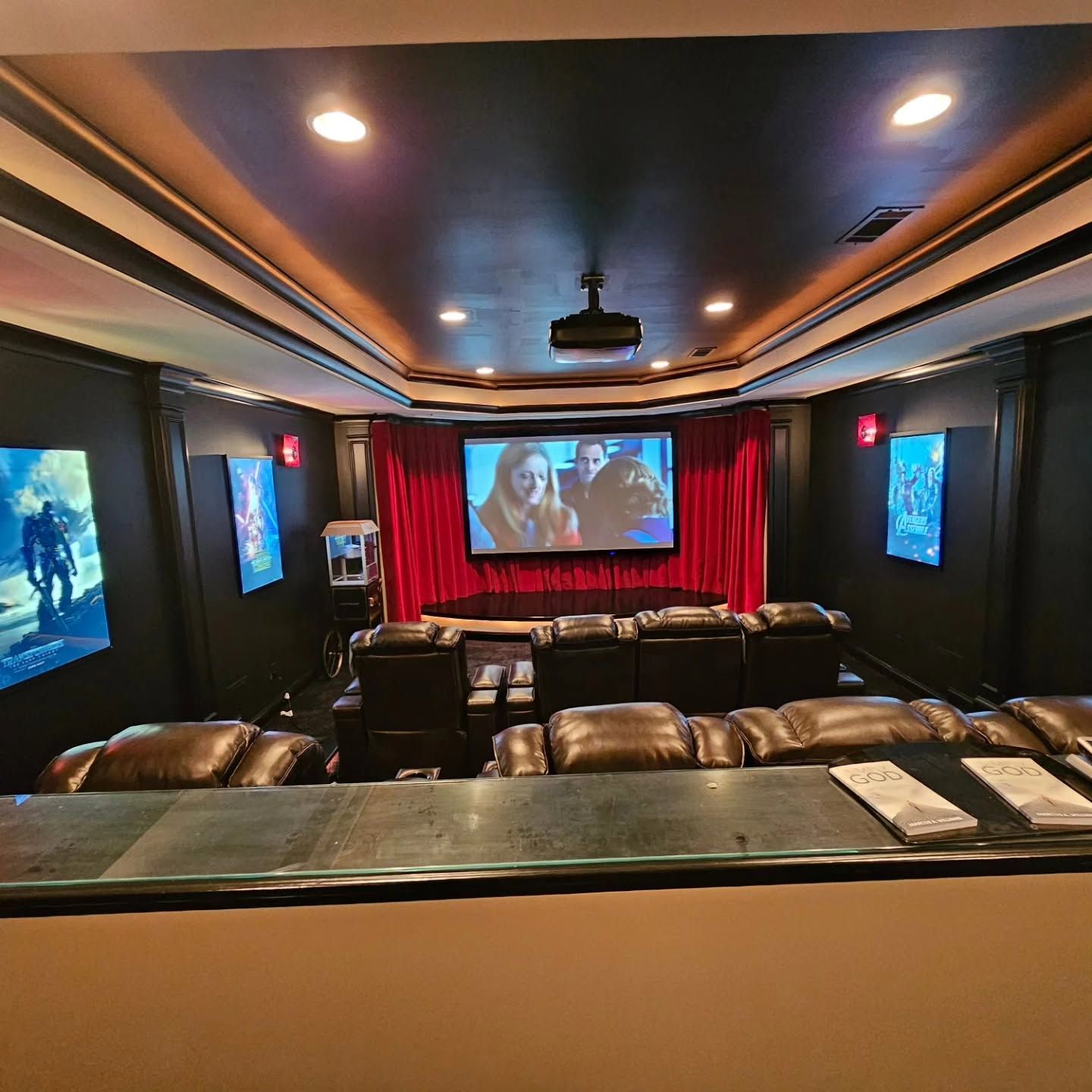
What Proper Theater Installation Actually Accomplishes
Theater seating and riser installation creates authentic multi-level cinema experiences within residential spaces by elevating back rows above front seating so every viewer sees the entire screen without heads blocking their view. Hidden wiring runs behind walls and under risers eliminate visible cables crossing floors or climbing walls, while equipment organization consolidates receivers, streaming devices, and amplifiers into ventilated racks that prevent overheating and simplify troubleshooting.
Once installation finishes, you control every component from a single remote instead of juggling separate controllers for the television, sound system, streaming box, and lighting. Custom lighting integration dims automatically when movies start and provides enough ambient glow during intermissions to move safely without flooding the room with brightness that ruins contrast ratios. The finished space handles feature-length films without equipment shutting down from heat buildup, speakers distorting at reference volume, or viewers repositioning themselves to see past obstructions.
The installation process includes calibrating audio levels so dialogue remains intelligible during quiet scenes while explosions deliver impact without causing discomfort. Equipment placement decisions account for future upgrades, ensuring you can swap projectors or add Atmos height channels without tearing into finished walls or reconfiguring seating layouts that already work.
Questions Property Owners Ask Before Starting Theater Projects
Homeowners throughout Smyrna and Metro Atlanta often need clarity on design decisions and installation logistics before committing to dedicated theater spaces.
What room dimensions work best for home theater installations?
Rooms longer than twelve feet allow proper seating distance from screens, while ceiling heights above seven and a half feet accommodate riser platforms without making back-row viewers feel cramped, though smaller spaces can still function as theaters with adjusted screen sizes and seating arrangements.
How does the consultation process identify layout opportunities?
The in-home visit measures exact room dimensions, locates structural obstacles like support beams and ductwork, evaluates ambient light from windows and fixtures, tests existing electrical capacity, and photographs wall surfaces to plan equipment mounting locations before design work begins.
Why does equipment placement affect long-term satisfaction?
Projectors mounted at incorrect angles create keystone distortion that wastes resolution, while receivers buried in closed cabinets overheat and shut down mid-movie, so placement decisions during installation determine whether your system operates reliably or requires constant adjustment.
When should homeowners schedule design consultations?
Assessments provide the most value before you purchase any equipment or commit to room layouts, since recommendations influence screen size selection, seating quantity, projector specifications, and construction decisions that become expensive to reverse after installation starts.
What separates clean installations from cluttered ones?
Hidden wiring strategies run cables through walls and under flooring during construction rather than surface-mounting conduit or leaving exposed wires crossing walkways, while organized equipment racks group components logically and provide ventilation that prevents heat-related failures.
City home theater completes the entire project from initial measurements through final calibration, ensuring every component works together before you host your first movie night. Discuss your theater goals during the consultation so design recommendations align with how you actually plan to use the space.